
What Is D+ (Elevation Gain) and Why It Matters More Than Distance
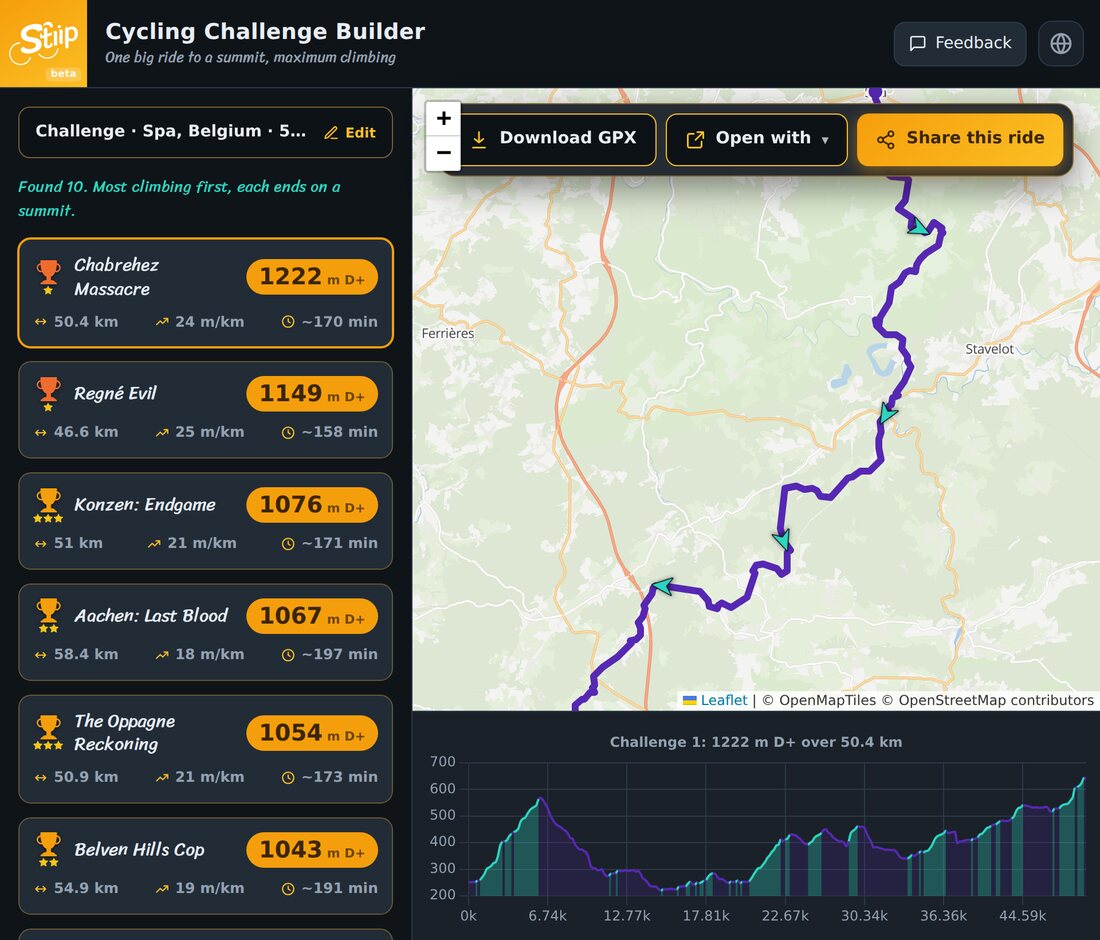
Two rides can both be 80 km and feel like completely different days. One is a flat spin. The other leaves you crawling. The difference is D+. Here's what that means, in plain words.
D+ means "how much you climb"
D+ is the total number of meters you go up over a whole ride. Add up every hill, and that's your D+ (also called elevation gain).
A flat 80 km ride might be 400 m of D+. A hilly 80 km in the Ardennes can be 1,500 m. Same distance, very different day.
Distance tells you how long. D+ tells you how hard.
Distance is time on the bike. D+ is the effort. If you want to get stronger, or ride the pretty roads, D+ is the number that matters.
m/km: how hilly, in one number
Divide D+ by distance and you get meters per kilometer (m/km), a quick "how relentless is it" score:
- Under 6 m/km, flat to gently rolling.
- 6 to 10 m/km, rolling. Real hills, with rest between.
- 10 to 15 m/km, properly hilly. Climbs come thick and fast.
- 15+ m/km, mountainous. Long climbs or wall after wall.
A hard Ardennes day sits around 12 to 15 m/km. A big Alpine stage can be 20+.
Why Stiip puts D+ first
Most planners look for the shortest or flattest route. Stiip does the opposite: it ranks routes by D+, so you start from the hilliest option instead of hoping a route turns out hilly.
Want to picture what your D+ is worth? See our scale of famous climbs by D+. Or just build a loop and check the number.